Category Archives: News

The 10 PBF 2014 courses and the 2015 courses

The PBF Journey

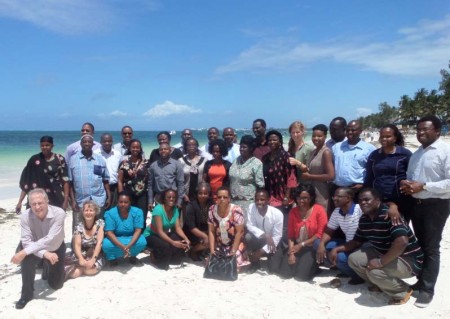
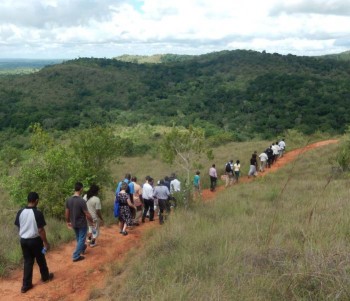
The PBF Journey continues – Shimba Hills Kenya

It has been a very exciting 2014 for SINA Health and its partners such as in particular the Kenyan, Cameroon and Lesotho governments, the World Bank, UNICEF, WHO, Cordaid, BEST-SD from Benin, BASP96 from Burkina Faso, the Littoral Regional Fund from Cameroon, HDP Rwanda and EGPAF Mozambique. There were during 2014 10 PBF courses with in total 284 participants including 25 participants that will attend the 42nd PBF course starting the 1st of December 2014 in Mombasa.

We would like to thank all participants for those memorable and stimulating discussions and moments in Mombasa Kenya Bay, Shimba Hills, Bobo Burkina Faso, Brazzaville, Cotonou and Ouida Benin, Kampala, etc. There were 54 participants with distinctions (20.8% of the total).

New PBF courses in 2015 are planned for:

  • January 20-31, 2015 in Freetown for participants from Sierra Leone with Cordaid,
  • Early March 2015 in Douala for the Cameroun government and the World Bank
  • March 23 – April 4 in Cotonou Benin.
  • Another English spoken course is planned for April – most likely in Mombasa.
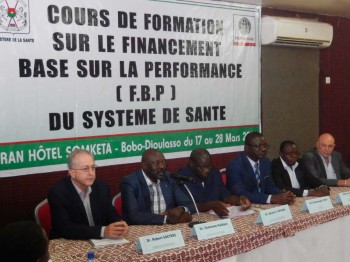
1. Ceremonie d'Ouverture

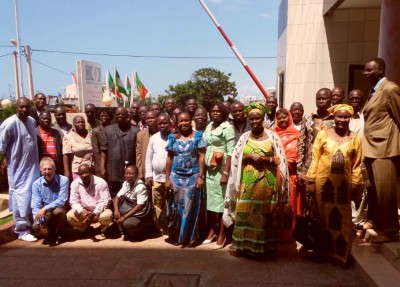
PBF course in Bobo – Burkina Faso

One can also download the reports of the 40th PBF course in Cotonou (Rapport Cours PBF Cotonou V241014) and the 41st PBF course in Douala (Rapport du cours PBF Douala V261114).

These Cotonou and Douala reports contain fascinating information about PBF in Benin (doing well with scaling up and making the design more PBF pure) and Mali (starting up an improved pilot) as well as about Education in CAR (with good results) and the health program in Cameroon (scaling up from 4 to 7 regions) and the health program in the Central African Republic (successful implementation of PBF during the crisis).
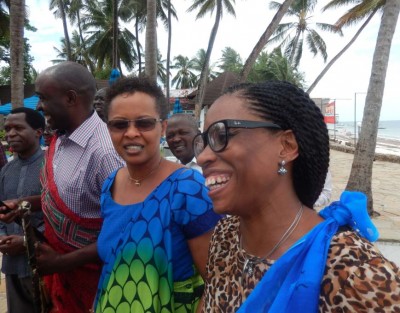
1000th SINA Health participant

The 1000th SINA Health course participant Nnenna IHEBUZOR

The Douala report also contains a protocol on which role PBF can play in Ebola prevention as well as how to strengthen the health systems during emergencies such as wars and natural disasters. The report also contains a questionnaire for a PBF quality review at primary schools and pre-schools.

The SINA Health team and its partners BEST –SD, BASP96, HDP Rwanda and the Regional Fund of Littoral Region wish the PBF family a very fruitful and successful 2015.

Print Friendly, PDF & Email

The 41st PBF course October 27 to November 7 in Douala

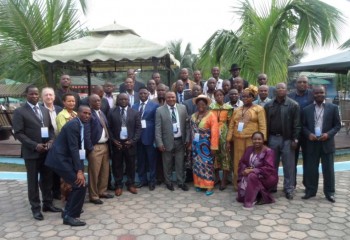
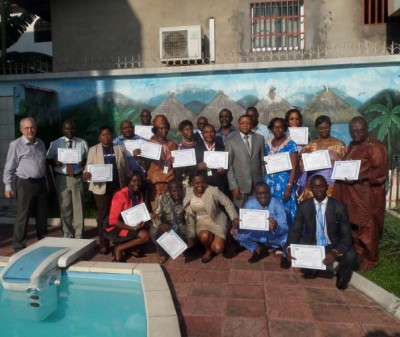
Douala Participants with authorities and facilitation team

Douala Participants with authorities and facilitation team

Hereby the report (Rapport du cours PBF Douala V261114) of the 41st PBF course in Douala. SINA Health in collaboration with the Regional Fund of Littoral finished this course at the 7th of November. There were 17 participants: 10 from Cameroon, 5 from the Central African Republic, 1 from Burundi and 1 from Congo Brazzaville.  All 17 participants passed the final test and 5 obtained distinctions.

It was a very pleasant and dynamic group in Douala and this PBF course became special due to its focus on a miscellaneous number of topics such as notably PBF in education (CAR),  PBF in administration e.g. police and local tribunals (Burundi), Ebola prevention as well as on PBF in emergency situations in the Central African Republic and East Cameroon. It shows how varied PBF has become and how fast PBF expanded during 2014.

PBF course role play

PBF course role play

The atmosphere during the course was that of hope whereby PBF has the potential to provide instruments to advance good governance, to directly inject money in communities and social services, to better manage health facilities, schools and administrative structures and to stimulate the local economy.

There is still a lot of work. PBF instruments must be further developed and tested in each specific situation and country and we need more people to do this work. The outstanding issues are notably how to select the vulnerable at low cost; how to strengthen community PBF; the development of the standard quality and business plan tools in the education and the administration sectors.

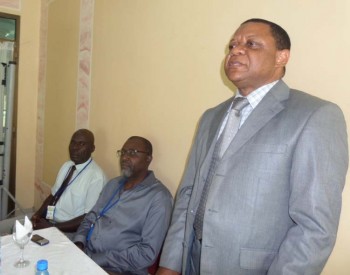
Closing ceremony with authorities from Littoral and NW Regions

Closing ceremony with authorities from Littoral and NW Regions

We congratulate the authorities in Cameroon and the Central African Republic with the fact that PBF seems in their countries to be the future reform approach. Cameroon will expand during 2015 the number of PBF regions from 4 to 7 and in CAR it seems PBF is the preferred way forward in the health and education sectors.

Moreover, it is also encouraging that the Burundi PBF experience since 2005 has now finally produced three scientific papers in respectively Social Science & Medicine, Health Affairs and the Global Journal of Health Science. This confirms what all those active in Burundi since 2005 already knew, which is that PBF produced very visible positive results. Yet, this was somehow difficult to “prove” scientifically. The three papers all show that the PBF approach produced encouraging results in Burundi and in particular by improving the quality of care. Yet, the papers also recommend more action research on specific topics such as targeting the vulnerable and thereby to further perfect the PBF system.

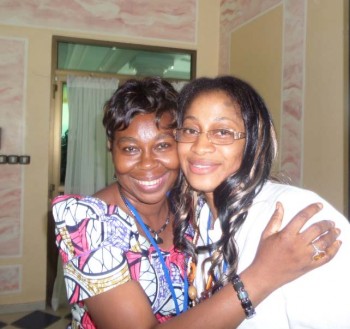
PBF courses make friends - Rosalie and Nadine

PBF courses make friends – Rosalie and Nadine

We would also like to congratulate the government of the Republic of Congo (Brazzaville), which has now started to release the funds to expand PBF to 86% of the population.

One of the nice thing about the PBF courses is also that friendships develop and we hope that those contacts will continue to deepen among the PBF family members  who attended the PBF courses since 2007 and among those who are members of the Community of Practice PBF.

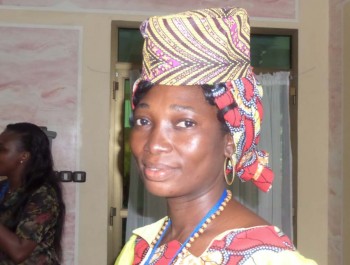
Valerie - The PBF village chief in Douala

Valerie – The PBF course village chief in Douala

In these times of conflicts, displacements, the Ebola epidemic and overburdened social services in schools and the judiciary system PBF provides a bright spark of hope and we must work hard that also in 2015 PBF will further advance and improve. SINA Health is committed to that aim and will assist organisations, countries and individuals to advance this performance agenda.

Print Friendly, PDF & Email

The 40th PBF course in Benin October 8-18 2014

Participants 40st PBF course in Benin

Participants 40st PBF course in Benin

Hereby the report (Rapport Cours PBF Cotonou V241014) of the 40th PBF course that ended saturday the 18th of October in the Atlantic Beach Hotel in Cotonou. There were 34 participants (22 from Benin, 11 from Mali and 1 from Burkina Faso) and 5 facilitators. All 34 participants passed the final exam and six participants obtained a distinction.

The Benin group identified the following problems:  (1) Health centers do not have sufficient management autonomy; (2) There exists a monopolistic system of procurement and distribution of essential drugs for government health facilities; (3) Health facilities are not allowed to recruit additional health workers even with their own (PBF) resources; (4) There is an incomplete separation of functions at the level of health districts and departments; (5) The PBF Program Coordination Unit (UCP) ensures at the same time the payment of the subsidies and recruits the Community Based Organisations (CBO), while it would be better to decentralise the contracting role to the Contract Development and Verification (CDV) Agencies at department level ; (6) The Secretary-General signs all the contracts with providers and CBOs while decentralisation of this contracting function to the Departmental CDV Agencies would be desired. 

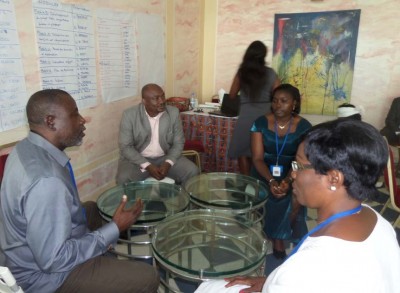
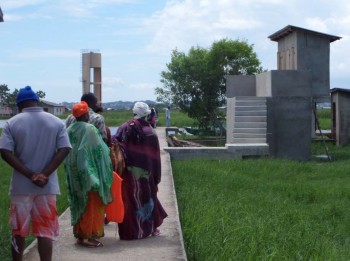
Visit to health centre

Visit to health centre

Recommendations by the Benin participants: (1) Promote more competition among suppliers of essential drugs and equipment and establish an updated list of suppliers from where health facilities are allowed to buy their inputs, while ensuring the establishment of a quality assurance system;  (2) Lift the ban on the recruitment of staff as part of the empowerment of health facilities; (3) Clarify the mandate and the institutional set up in the context of the separation of functions and good governance between the providers, the regulators, CDV agencies, payment agencies and organizations that strengthen the community voice at peripheral level.

Chef de village et Dr Catraye

Chef de village et Dr Catraye

The Mali group identified the following problems: (1) There is an inadequate budget for the PBF program of less than USD 3.00 per capita per year; (2) There is an insufficient number of output indicators; (3) There Is not yet a comprehensive national PBF strategy; (4) Government providers are still dependant on central procurement of medicines and inputs; (5) There is a weakness in the PBF Community program; (6) Contracts are signed by the health committee and not by the head of the health centres; (7) PBF equity indicators are not yet introduced; (8) Private sector providers are not involved.

Atlantic Ocean Beach Early morning

Atlantic Ocean Beach Early morning

Recommendations by the Mali participants: (1) Increase the PBF budget to at least 3 dollars per capita per year; (2) Increase the number of quantity indicators to at least 20, and thereby assure that the basic and hospital packages are comprehensive; (3) Develop a national PBF strategy document; (4) Improve the autonomy of health facilities by allowing them to buy essential drugs and other inputs from approved suppliers operating in competition; (5) Develop the PBF community indicators; (6) Sign contracts between CDV Agencies and the direct health providers; (7) Include PBF equity indicators for vulnerable areas and individuals; (8) Involve private organisations in the implementation of the PBF through the mapping of private structures and (sub)contracts.


Print Friendly, PDF & Email

The 39th PBF course in Mombasa

Mombasa PBF course group August 2014

The Mombasa PBF course group of August 2014

The 39th PBF course finished in Mombasa on the 29th of August 2014 with 28 participants. The largest group came from Kenya (15x), followed by the Nigeria delegation (7x) and the Malawi group (3x). There were single participants from Zambia, Ethiopia and the Netherlands each.

Five participants obtained a distinction for their final exam for which we congratulate them.

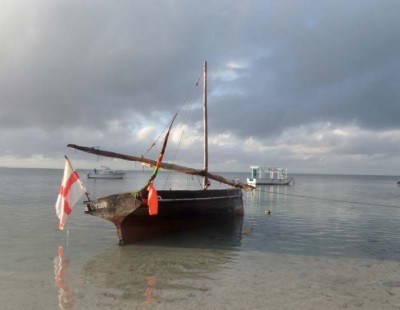
Mombasa beach in the early morning

Mombasa beach in the early morning

Unfortunately, 5 participants from Sierra Leone and 3 from Nigeria were unable to attend  due to the Ebola outbreak in West Africa.

Yet, we believe that countries affected by Ebola should also benefit from robust PBF programs in order to manage this epidemic. For instance by applying social marketing through improving household hygiene and sanitation, improving the Ebola and HMIS reporting system and by establishing Ebola isolation centres. In urban areas in particular it is extremely important to improve public-private partnerships to fight the epidemic through PBF contracting mechanisms such as already tested in Douala, Cameroon.

Best debater of the day

Best debater of the day

There were 3 participants, from the Malawi civil society CSEC, who will start working as contract development and verification (CDV) agency for the education sector. This PBF pilot programme will support 30 schools and 15 pre-schools through performance contracts aimed at first of all improving the quality of teaching and the teacher – pupil ratio. The key to quality school services is to improve the (financial) motivation of teachers. This may require a PBF mechanism to increase the fixed remuneration of teachers but equally a system of variable remuneration based on performance.

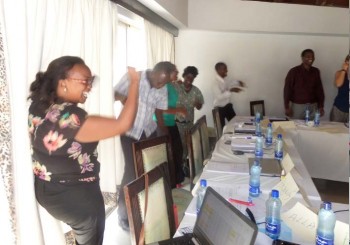
Class energiser

Class energiser

The methodology of the course is that of adult learning and the aim for each participant is to return to their respective workplaces with a SMART action plan of what to do during the first week, the next 6 weeks and the next 6 months to advocate and / or implement PBF.

Print Friendly, PDF & Email

The 38st PBF course in Brazzaville

Brazzaville PBF course participants

Participants Brazzaville PBF course

The 38st PBF course finished in Brazzaville at the 18th of July.

There were 30 participants mainly from the Ministry of Health at national level and district level, 6 members of civil society and one participant of the Ministry of Social Affairs. The course aimed at strengthening the in-country capacity for PBF.

Secondly, the course aimed to train private sector participants for their role as contract development and verification agencies and to make better use of the opportunities to become principal contract holders at the primary and the hospital levels.

Le voyage PBF en Repubique de Congo

Le voyage PBF en Repubique de Congo

Discussions have been fruitful on issues such as how to create more political willingness to support PBF in Congo Brazzaville and how to integrate the different vertical programs.

A main conclusion of the course was that there is a need to inform and train the main decision makers in PBF and to change traditional manners of thinking about topics such as community involvement.

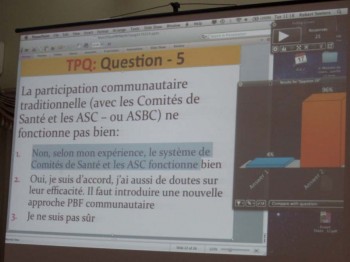
Turning Point pour connaitre l'avis des participants

Turning Point pour connaitre l’avis des participants

Print Friendly, PDF & Email