Category Archives: News

The 53rd PBF course – Cameroun, CAR, Gabon, Mauritania

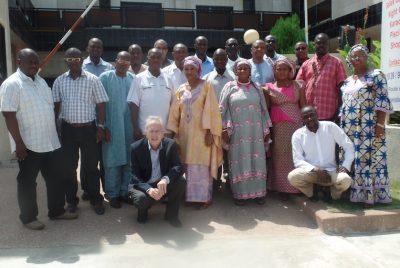
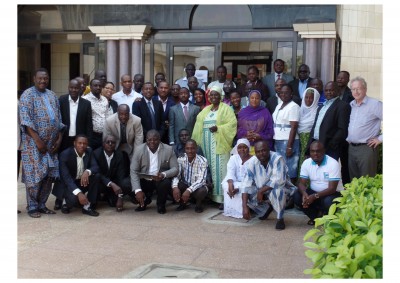
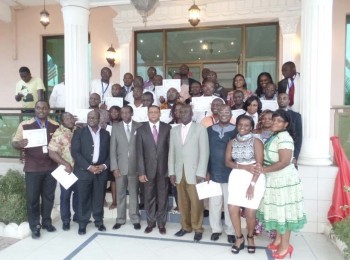
Les 45 participants de Douala avec les autorités de Douala

Les 45 participants de Douala avec les autorités

The 53rd International Course PBF was held in Makèpe Palace Hotel in Douala, from the 23rd of May to the 3rd of June 2016. Hereby the course report.

Forty-five participants took part in this course and there were five facilitators. 35 participants came from Cameroon, 6 from Central African Republic, 3 from Gabon and 1 from Mauritania. The atmosphere was great during the course and the level was high compared to previous courses. We welcomed 11 participants, who obtained distinctions – which means a score of 90% or more for their final test.

The main recommendations were the following:

GABON

  • Design a “pure” PBF project for the strengthening of the health system and with enough resources to ensure its adequate implementation.
  • Create a technical PBF Unit within the Ministry of Public Health to spearhead the polit program and create Contract Development and Verification (CDV) Agencies at the regional level.

CENTRAL AFRICAN REPUBLIC

  • Share the lessons learned from the 53rd international course PBF at several levels               => Organize a feedback meeting within the Ministry of Health;

=> Organize a meeting with Parliamentarians to advocate for PBF;

=> Organize advocacy meetings with decision makers and partner organizations;

  • Conduct the mapping and accreditation of pharmaceutical firms;
  • Hold meetings to revise the legal framework governing the pharmaceutical sector with the aim to boost competition;
  • Organize training sessions for 60 PBF trainers.

MAURITANIA

  • Ensure that the new PBF pilot program obtains at least USD 4 per capita per year;
  • Ensure that the design of the new PBF program includes the autonomous management of health facilities including for the buying of inputs from distribution centers operating in competition.
  • Sign contract with various components of civil society such as for provision (in urban areas), patient satisfaction surveys and to perform the role of the newly to be created CDV Agencies
  • Define clearly the responsibilities of the different stakeholders in PBF
  • In conclusion, allow a system whereby those who produce more also get paid more.

Lonely at the top

Lonely at the top

CAMEROUN CENTRAL LEVEL

  • Discuss and advocate with the Ministry of Finance and with Parliamentarians to ensure that PBF health facilities are allowed to autonomously manage their revenues;
  • Conduct general and financial capacity building for health facility managers at all levels of the health pyramid;
  • Increase the proportion of the health budget that will be transferred directly in cash towards the health facilities, community and districts;
  • Better define the PBF management standards
  • Strengthen and implement the integrated evaluation and supervision by the Ministry of the regions, districts and health facilities by the MOH directorates in collaboration with the national PBF unit;
  • Update the mapping of pharmaceutical wholesalers and ensure their quality standards through an accreditation system
  • Strengthen the capacity of providers in the management of medicines and pharmacy vigilance
  • Organize awareness workshops for the different directorates within the ministry as well as for the regions and districts that will be enrolled in PBF
  • Produce programs for television and other social media to explain and promote PBF for the population

CAMEROUN: CENTRAL HOSPITAL YAOUNDE

  • Ensure the autonomous general and financial management in the hospital in general and the departments in particular so that the departments can improve their performance and operate efficiently;
  • Improve good governance, transparency and accountability in all hospital departments;
  • Improve both extrinsic and intrinsic staff motivation through both positive and negative incentives;
  • Develop equity mechanisms in the work plan of the hospital to ensure the care for vulnerable people.

Happy moments

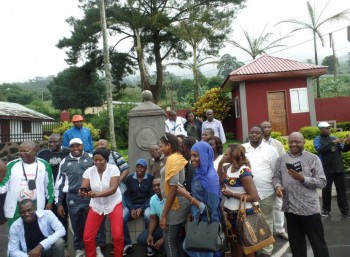
Happy moments

REGIONAL CDV AGENCIES AND FUNDS FOR HEALTH PROMOTION

  • The MOH PBF Unit must develop and distribute the national PBF manual so that the CDV agencies and Regional Funds of Health Promotion know their roles;
  • Authorities must facilitate as soon as possible the start of PBF in Adamaoua Region;
  • The MOH must ensure that all PBF health facilities have the autonomy to manage their drugs purchases.

YAOUNDE HGOPY HOSPITAL

  • Advocate with the MOH and the Ministry of Finance that the human resource and the financial management of the HGOPY hospital will become autonomous
  • Increase the profits of the hospital departments by increasing the revenues and reducing non-justified expenses;
  • Improve staff satisfaction and the transparency in the hospital by generating enough PBF performance bonuses and by using the indices management tool;
  • Reduce the debts of the hospital.

LAQUINITINIE CENTRAL HOSPITAL DOUALA

  • Conduct a feed back session in the hospital on the lessons learned of during the 53rd international course on PBF
  • Creating a hospital PBF steering committee
  • Develop PBF working tools for the hospital such as the department business plans, service contracts and the department indices management tool
  • Sign performance contracts between the general directorate of the hospital and the departments

AD LUCEM PRIVATE HOSPITALS

  • Share the lessons learned of the 53th PBF course with AD LUCEM decision makers
  • Start a PBF pilot and sign contracts between the AD LUCEM central authorities and the Bali General Hospital as soon as possible
  • Train the hospital staff
  • Conduct a hospital-based quality assessment
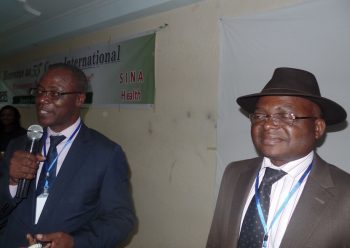
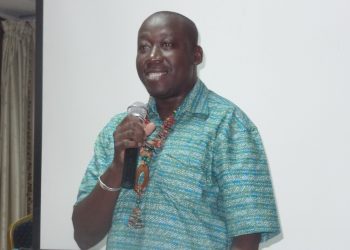
Les autorités du village PBF de Douala

The PBF village authorities

REGIONS AND DISTRICTS CAMEROUN

  • Advocate for more autonomy in all health facilities and better monitor the implementation of the PBF;
  • Further strengthen the autonomous use of revenues by the management of PBF health facilities;
  • Advocate that religious health facilities are also free to purchase their medicines and other medical supplies from different suppliers instead of only from their own distribution centers;
  • Further strengthen that the determination of user fees tariffs will be done by the health facilities and not centrally;
  • Organize PBF meetings at regional and health districts levels.


Print Friendly, PDF & Email

Recommendations for Mali, IC and DRC

Les participants de Cotonou

The participants of Cotonou

A PBF course was held in Cotonou from the 25th of April to the 6th May 2016 with seventeen participants from Mali, and one from respectively the DRC and Ivory Coast. The course was organised by SINA Health and BEST-SD Bénin and we thank the Benin MOH for their warm cooperation.

The atmosphere of the course was excellent and the participants left Cotonou with a strong desire to improve the health system in their respective countries. They concluded that Mali and the DRC still needs improvements in their PBF design. Three participants (all from Mali) obtained distinctions.

MALI

Autorités de village

Autorités de village

The design of the new PBF project and the process to start PBF in Mali could benefit from the following:

  • Prepare a report and organise feed back meetings with the aim to have the same views for the central level authorities, technical and financial partners as well as for the authorities at regional and district levels;
  • Advocate for the implementation of PBF during an enlarged meeting with the Cabinet of the MOH;
  • Harmonise the PBF documents and improve in particular the institutional set up;
  • Arrange 1 or 2 training sessions for decision-makers from the central in Mali on PBF with the support of external consultants;
  • Organise a study tours for health high decision  makers to countries that have advanced with PBF;
  • Involve participants of this course and the October 2014 course to advance with PBF in Mali;
  • Organise training sessions in those districts that will start PBF;
  • Conduct a baseline study;
  • Review the PBF project budget to ensure that financial resources are sufficient to start the project. It takes around 4 dollars per year per inhabitant to provide the full health packages at primary and hospital levels;
  • Transfer GAVI funds now available for a project that seeks to accredit health facilites towards PBF;
  • The current project has 16 indicators while an average of 25 to 35 would be desired. We propose to include more indicators to assure that holistic health packages can be provided at health facility level instead of only limiting them to reproductive health and immunisation indicators.
  • Liberalise the market for the distribution of essential medicines. Promote the development of multiple distributors operating in competition while the government strengthens its regulatory capacity to assure the quality among those distributors. This requires an accreditation system for all public and private distribution centres;
  • Develop a document that explains the role and autonomy of the in-charges of health facilities.

Ivory Coast

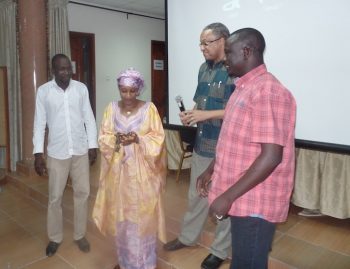
Meilleur participant de la journée

Best participant of the day in cotonou

The population contributes 56% of total health expenditure in Ivory Coast while the government only contributes 18% of in total USD 60 per person per year. Maternal mortality with 614 deaths per 100,000 live births is high.

Recommendations Ivory Coast

  • Give PBF health facilities the legal authority (for example in a projet memorandum of understanding) to formalize their autonomy and thereby to be able to apply the PBF best practices. This document should also include the roles for the Regional Health Directorates, District Health Teams and Regional CDV Agencies;
  • Break the monopoly and exclusivity of suppliers and provide an opportunity for health facilities to purchase drugs at public and private distributors operating in competition but accredited by government;
  • Ensure that private providers can be integrated in the PBF system;
  • Provide a training program so that public and private health facilities gain more knowledge, skills to implement PBF;
  • Discuss with the Ministry, through the Directorate General and the DPPEIS in partnership with other partners such as the Global Fund, USAID and the World Bank, the possibility of combining in health districts the MSH Development Program in Leadership and Governance with PBF.

DEMOCRATIC REPUBLIC OF CONGO

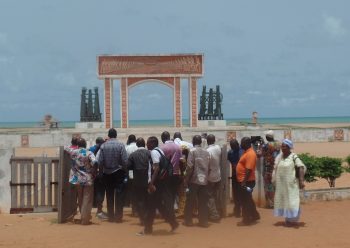
Porte de non retour Ouidah

Porte de non retour Ouidah

There are concerns about the PBF pilot project funded by UNICEF. We propose the following recommendations:

  • The government may liberalise the drug sector and cancel the Regional Distribution Center monopoly system. Yet, this also requires that government and the partners ensure effective quality control of the distributors through an accreditation system;
  • UNICEF may take into account and assure the financing of all indicators in the primary and hospital health packages;
  • UNICEF should assure that the Family Kits approach is also assured with its specific PBF targets;
  • UNICEF may transform, if possible, the budget for the inputs of the family kits into PBF subsidies directly to providers, and create a supply system with accredited distributors;
  • UNICEF may transform the subsidies allocated to the districts into PBF;
  • That the contract development and verification agency (CDV) convinces the religious authorities to entrust the payment function to an independent structure.


Print Friendly, PDF & Email

Recommendations for Kenya, Lesotho, Liberia and Nigeria

Group 51 Mombasa

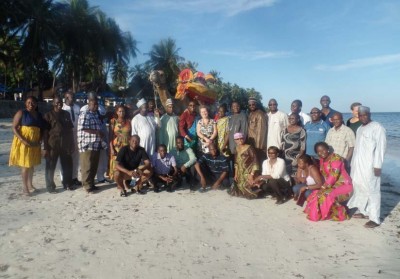
The 29 participants

On Friday the 11th of December 2015, the 51st SINA Health PBF course ended in Mombasa with 29 participants: from Nigeria (13x), Kenya (7x), Liberia (5x), Lesotho (3x) and Switzerland (1x).

From day one, the group has been engaged in lively discussions and nice exchanges at the border of the Indian Ocean. The chief aim of the course remains of course to learn from each other and for everyone to incorporate as much as possible the rapid new developments in PBF of the last few months into everybody’s country design.

COUNTRY SPECIFIC RECOMMENDATIONS

  1. KENYA
Mombasa sunrise

Mombasa sunrise

Despite the fact that health expenditures has considerably increased between 2001 and 2014 the funds allocated to health care remain inadequate with 6% of total government expenditure against the Abuja norm of 15%. Yet funding may not be the main problem in Kenya but rather the distribution of those funds among the primary, secondary and tertiary level and the cost-effective use of the funding in general. Following the new Constitution, Kenya is engaged in an administrative devolution process of services towards a novel system with 47 autonomous Counties. Lessons learned and mistakes committed are gradually becoming available. The World Bank supported RBF program runs out by the end of 2016 with the idea to scale up RBF to 20 more counties from 2016 onwards. A new program with the World Bank and JAICA is currently being negotiated. The Kenya participants to the PBF course conducted the PBF feasibility scan, which produced the low score of 22%.

The Kenya recommendations are the following:

  • On the march

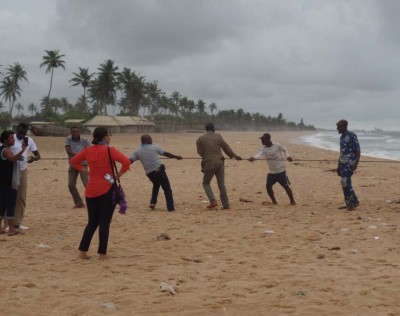
    On the march

    Advocate for change in the funding to comply with at least 3 USD per capita for the new RBF program of 2017 onwards.

  • Collaborate with NGO’s to initiate community verification in all the counties.
  • Advocate that facilities participating in PBF have autonomy as PBF best practice.
  • To advocate that facilities have right to purchase inputs from any accredited supplier and not only from KEMSA.
  • PBF unit to have further discussions with the County Departments of Health on the need for CDV Agency.
  • Lessons learned from Samburu indicated that it is best conduct supervision and quality verification together with support of development partners at each county.
  • Inclusion of CDV Agencies at the Counties in the budget in the proposed PBF project.
  • Increase the number of RBF indicators at basic health package level from the current vertical ten towards a more horizontal package of at least twenty.
  • Facility managers should be allowed to buy their inputs from accredited distributers instead of receiving drugs from the central medical stores (KEMSA).
  • Assess how much funding may be available in the various programs post 2016 (2017-2022), notably the new 150 million US$ program currently discussed with the World Bank and the further funding from the Japanese government for health systems improvement.
  • To cost out the required budget for a multi-annual RBF program on fully-fledged PBF program for example in 4 counties to be followed gradually by the other of the 21 selected counties.
  • To organize a senior-level workshop for the key policy makers (CS, PS, CMS, Head Policy, Planning and Finance and their staff) in which the potential of a mature RBF program would be discussed.

2. Lesotho

Group work

Multi country exchanges

The country allocates 14.5% of its public budget to health. Together with the out-of-pocket payments and donor contributions the total per capita health expenditure is a considerable USD 123.4 per capita per year. The main health problem in Lesotho is HIV/AIDS with a prevalence of 23%, also being the main cause of mortality. The maternal mortality rate is equally high with over 1000 deaths per 100,000 live births.

The Lesotho team identified the following bottlenecks for the implementation of PBF:

  • Delays in financial flows and management towards health facilities
  • Government health facilities are not allowed to open own bank accounts at facility level, with long delays in funds reaching the facilities.
  • Lack of a systemic approach of the village health workers system in Lesotho. There are no formal indicators for incentivising VHWs, even though a division: 40% – facility improvement, 30% – personal bonuses and 30% – Village health workers has been proposed. There are the unusually high number of around 100 VHWs per facility.
  • The hospital Lesotho PBF scheme is still limited by only financing the MCH indicators and not allowing individual performance payments to staff. In addition hospital indicators are a mix of primary care and secondary level ones and several go unreported.

Lesotho recommendations

  • Negotiate opening HF bank accounts, by proposing an experiment to the Accountant General with opening bank accounts and funds being transferred directly. Fro this the in-charges require to improve their basic financial management skils.
  • Develop SMART indicators for VHW program. The HF in-charge should select the adequate number of active VHWs to use.
  • A new PBF hospital design is proposed to pay against quality of care measured by departments and paid against a fixed overall cap allocated per hospital.

3. Liberia

Shimba Hills Park

On the watch for new ideas

The PBF feasibility scan conducted by the Liberia team showed a score of 42%.

Liberia recommendations

  • Hold a meeting with the Deputy Minister for considering PBF in program activities also for public health emergencies.
  • Advocate with Senior Management Team (SMT) to utilize PBF mechanisms to allot PBF budgets to facilities, to present to them the documentary evidence for facility autonomy and to present documentary evidence of facility autonomy to procure drugs.
  • Assess the feasibility of introducing CDV agencies approach with involvement of private and faith-based institutions
  • Advocate with donor agencies through the SMT to better coordinate financing flows and adopt performance financing
  • Reinforce the setting up of indicators with the focus on quality, equity and efficiency. Strengthen collaboration with MOH relevant units, including Quality Management Unit to define PBF quality indicators
  • Conduct a mapping exercise to identify PBF partners at other government and MOH agencies and establish a national PBF taskforce
  • PBF steering committee to engage community members for selecting organisations to conduct client satisfaction surveys
  • Discuss with key stakeholders at MOH to conduct the evaluation household and quality studies. Work with Research Unit to design protocol to conduct baseline survey for PBF at selected hospitals
  • Meet with key management staff to clearly define the chain of communication at primary and hospital level PBF
  • Facilities on a contractual basis to develop business plans
  • Work with key stakeholders to introduce equity bonus into the PBF program to capture hard-to-reach areas
  • Organize a two-weeks training orientation meeting for political buy-in to PBF concepts for key stakeholders on PBF.

4. Nigeria

PBF started in 2011 in Ondo, Nasarawa and Adamawa States in Nigeria with a loan of the World Bank and administrative support of the National PHC Development Agency (NPHCDA). The program was scaled up in 2015 to 50% of the Local Government Authorities (LGA) in these three states. Yet the other 50% control LGA’s still maintain the DFF study approach. The PBF program considerably improved output and quality of the services and there is great enthusiasm. Once fully rolled out the main problems that PBF could potentially reduce the inequalities between the Northern and the Southern States in Nigeria. Moreover it could reduce maternal mortality, which is high by global standards. With the recent political changes in Nigeria, PBF could also become a major instrument for the new government to enhance transparency in the social services and to assure that public resources indeed reach the beneficiaries. PBF may also provide the instruments to strengthen and rehabilitate health facilities in Nigerian directly affected by political turmoil in the Northern States. The NPHCDA proposes to extend the PBF program to some of the Northern and North-eastern states of Nigeria, and for this the World Bank loan program “Save-One-Million-Lives” of 500 Million USD funds may be pledged.

Ondo State

Village chief Taiwo

The famous waterfalls for eternal life

Ondo State has very positive experiences with PBF since 2011. The PBF feasibility scan conducted by the Ondo participants showed a high score of 94%. Yet, the private and religious health facilities are not yet included in the PBF program. Moreover, there is poor quality and quantity of services at Decentralized Facility Financing (DFF) facilities. These DFF facilities were meant as a study arm of the World Bank impact study, produced according to all observers’ significantly less promising results, but are  still maintained.

Ondo State recommendations

  • Introduce an urban PBF approach in the cities
  • Survey all public / private / faith based health facilities (accredited or not)
  • Validate the data collected at the LGA authorities and create consensus on existence of facilities and their accreditation
  • Define the population served in each catchment area and service package offered.
  • Organise workshop with all private facilities to obtain final consensus and approval of the health facility survey data and the selection of primary and secondary contract holders
  • Conduct PBF training for retained health facilities
  • Negotiation and signing of contracts
  • Transfer all DFF health facilities into the PBF approach.
  • Discussion with the national PIU/WB
  • Categorization into main and secondary contract holders

Northern States in Nigeria

Group 51 for eternal life

Entertain and come back refreshed

The Northern States were requested by the NPHCDA to propose action plans on how to start PBF. For this reason, we welcomed 9 participants from 4 States in Mombasa.

The main recommendations for introducing PBF in the Northern States are:

  • Assure sufficient funding for the new PBF pilots in each State and target for achieving adequate economies of scale a population of between 300,000 and 700,000 per State. The costing for these pilots would then be approximately USD 1 – 2 million per year per State.
  • Target and pilot PBF in 2-3 Local Government Authorities in each State with all health facilities at primary and hospital level. This would include the regulatory authorities and the CDV Agencies at State and LGA levels.
  • Negotiate sufficient funding with Federal level not only from the “Safe 1 Million Lives” project but also from any other Nigerian State or Federal level budget lines.
Print Friendly, PDF & Email

Recommendations 50th PBF course in Cotonou

Les participants du cours PBF de Benin

The 39 course participants of the Cotonou course

The 50th PBF course was held in Cotonou from October 12 to 23, 2015 with thirty-nine participants from Chad (16) Niger (10x), Haiti (4x) Cameroon (3x), DRC (2), Comoros (2x), Ivory Coast (1x) and Benin (1x).

There were six participants, who obtained a certificate of distinction with a score of 90% or more:

  • Dr Adama OUEDRAOGOU of Benin; Christina DAURISCA from Haiti; Koulthoume Maoulana from the Comoros; Dr Charles Kambo Sanza from DRC; Dr Pascal BEMADJINGAR from Chad; Dr. Francis SIMO Peumo from Cameroon;
  • Christian WOLLO KLA from Ivory Coast obtained a Mention with 87%.

COUNTRY RECOMMENDATIONS

Cameroon

  • Advocate for derogations for the PBF structures and regulatory authorities.
  • Recruit more quality staff for the Regional CDV Agencies
  • Advocate for the inclusion of bonuses for vulnerable regions
Les sculptures de Benin

The sculptures of Benin

Comoros

  • Conduct a feed back meeting within the MOH on the PBF training
  • Conduct a restitution with the other stakeholders such as the Ministry of Finance, AFD, GAVI, UNICEF, UNFPA, CCM, Ministry of Education, FENAMUSAC, MAEECHA, etc.
  • Organize the external review of the current pilot PBF Project
  • Implement the recommendations of this review
  • Mobilise additional resources
  • Scale up the PBF program

Ivory Coast

Cote d’Ivoire is scaling up PBF, which is considered an effective instrument to improve the performance of the health system and a precursor for radical reforms of the health system. There is already ownership by the Ministry and other stakeholder’s buy in.

Niger

  • Assign staff to the PBF unit required for its operation
  • Organize a round table of partners to mobilize funds to ensure PBF
  • Advocate for the opening of a PBF line in the national budget
  • Integrate private health facilities in PBF
  • Train and supervise community workers on the PBF indicator “Household Visit”

Chad

  • Organize meetings at national and regional levels on the 50th PBF course
  • Organize a high-level advocacy meeting and training on PBF
  • Establish a pool of trainers in PBF
  • Advocate within the MSP for more autonomy at health facility level to procure essential drugs at accredited wholesale organizations outside central medical stores;
  • Provide a budget line for the PBF investment units at health facility level
  • Conduct the rationalization of the health facilities in the PBF project area

Haiti

  • Le voyage PBF sous supervision du chef de villageInclude 3 indicators on HIV / AIDS, malaria and tuberculosis in the PBF package;
  • Brief the contracting team responsible for the implementation of the International Strategy on the PBF course;
  • Revise the indicators;
  • Propose the insertion of the Investment Units.


Democratic Republic of Congo

Difficulties

  • Low budget allocated to the health sector;
  • Strong centralization of the health system resources;
  • Poor management of resources: corruption, lack of accountability;
  • BF is necessary in DRC to address these issues.

Benin

Strategies to strengthen the health system and the FBR in Benin:

  • PBF promotes the achievement of the Sustainable Development Goals.
  • Integrate other MOH departments in the consultation about the PBF;
  • Obtain the government’s commitment to maintain an appropriate level of governance to ensure the success of the PBF, including progress towards decentralization;
  • Ensure, that health facilities have sufficient equipment and personnel;
  • Ensure that the innovative initiatives (community PBF, quality assurance, involvement of the private health sector, …) are not diverted into vertical programs, but retain their cross-cutting nature;
  • UNICEF, through its mission to the realization of rights of children in accordance with the Convention of Rights of the Child (CRC) is part of this process in Benin not only to strengthen the acquired high impact package at community level but also at health facility level to the fight against child, maternal, and neonatal mortality.


Print Friendly, PDF & Email

The Douala 47th strategic PBF course finished


Cours PBF 47 DoualaThe 47th PBF course finished the 26th of June 2015 in Makepe Palace Hotel in Douala.

The 47 participants all came from Cameroon and among them 34 from the Ministry of Health in Yaoundé, 5 from UNFPA and 1 from UNICEF and HGOPY.

There were 6 distinctions which implies a score of 90% or higher in the final test.

Chef de village avec meilleur participantOverall, the International PBF Course Douala was a great success. Also, should we congratulate the 8 groups of participants for the quality of the recommendations.

The report contains important recommendations in particular concerning the need of upscaling PBF in Cameroon, the restructuring of the Regional CDV Agencies and setting up of the national PBF Technical Unit in the MOH as well as proposals for the indicators at primary and hospital level and the costing.

Le dimanche social agréableThe more detailed recommendations of the 8 groups can be found in the French version of this posting.


Print Friendly, PDF & Email