Category Archives: News

Improving PBF Feasibility Scan

IMPROVING THE PBF FEASIBILITY SCAN

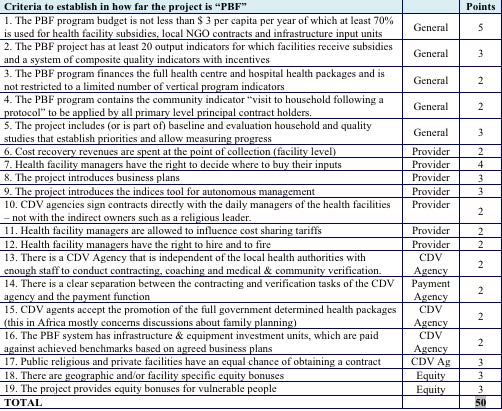
One of the results of the debates during the course in Cotonou was that we slightly adapted the feasibility scan from 17 to 19 criteria.

We added the separation between the contract development & verification function (CDV) and the payment function. Another new criterion is the introduction of the indicator “visit to household following a protocol”, which has shown its merits in Cameroon.

Feasability Scan

Print Friendly, PDF & Email

The 37th PBF course Benin

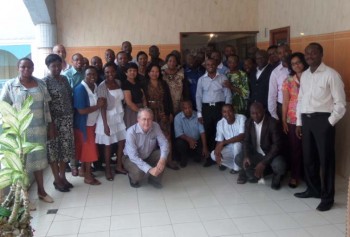
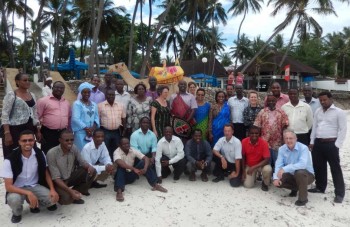
Groupe Cours PBF 37

The 33 participants of the PBF course group 37 of Cotonou

At June 27th, 2014 the 37th PBF course ended in Cotonou, Benin.

There were 33 participants: 13 from Benin, 6 both from Madagascar and Burkina Faso, 3 from Burundi, 2 both from CAR and DRC and one from Cameroun.

The debates were lively in particular concerning the topic of the involvement of private for-profit health providers.

Thinking outside the box

Thinking outside the box

This course again showed the importance of working with a group from different countries, which allows participants to think outside the box.

Benin added 13 persons trained in PBF and this is important because the country could benefit from a more pure PBF approach with more autonomous health facilities. Yet this requires advocacy and political will.

Madagascar just started PBF and could  benefit from a more pure form of PBF with a larger per capita budget, a larger package to be subsidised and to include the hospital level.

Are we pulling in the same direction?

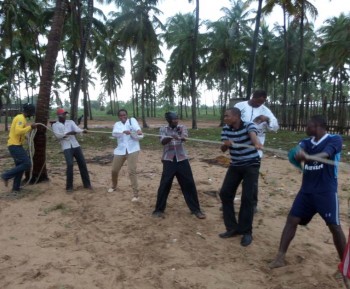
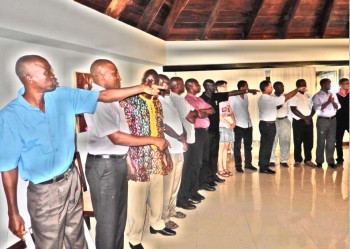
Are we all pulling in the same direction?

Burundi was the most advanced country in PBF present during the course and this helps the participants from other countries to learn.

In Central African Republic the main question is how to maintain the achievement of PBF also during the crisis that started in March 2013.

In DRC it will be important to advance to performance financing instead of all kind of input models and monopolistic supply of drugs in this huge country where only decentralisation and market forces can solve distribution problems.

Courageous PBF participant with Python

Courageous PBF participant with Python in Widah

One of the main ideas of this course was also to think outside the box with innovative solutions for problems to emerge.

Print Friendly, PDF & Email

PBF in the CAR emergency

Destroyed health centre in CAR

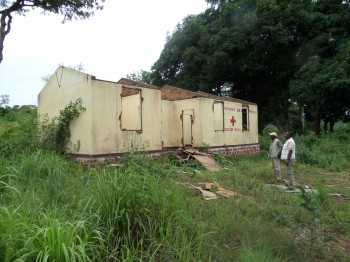
Destroyed health centre in CAR

An evaluation took place on how PBF performed during the war in the Central African Republic since March 2013. It appears that emergency NGOs should also start applying a PBF approach whereby local health facilities continue to function autonomously instead of by external managers.

A targeted free health care approach in disaster situation can be applied by increasing the subsidies for the curative PBF indicators. Yet, when economic life returns to normal, cost sharing should also return so that the health facilities can continue to operate in a sustainable fashion.

A study in May 2014 showed that this produced better results and is more cost-effective while also strengthening already existing (PBF) health systems.

Print Friendly, PDF & Email

The 1000th PBF course participant

1000th SINA Health participant

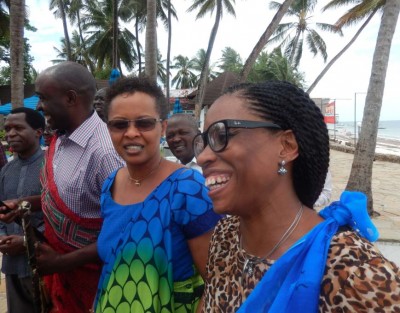
Dr Nnenna IHEBUZOR on the right with the facilitator Dr Claire Rwiyereka and the village chief of the course in traditional dress Dr Francis KIIO.

During the 36th PBF course in Mombasa last April, SINA Health welcomed the 1000th PBF course participant.

It was Dr Nnenna IHEBUZOR, Director of the NPHCDA in Abuja Nigeria.

Since 2007, when the first PBF course was organised in Katana DRC, SINA Health trained 1009 participants. The main partners were Cordaid the Netherlands, HDP Rwanda, BEST Benin and several governments. We thank the organisations that financed the courses such as in particular the World Bank, Cordaid, EGPAF, WHO, KFW, Belgium Cooperation, UNICEF and UNFPA as well as sometimes individuals.
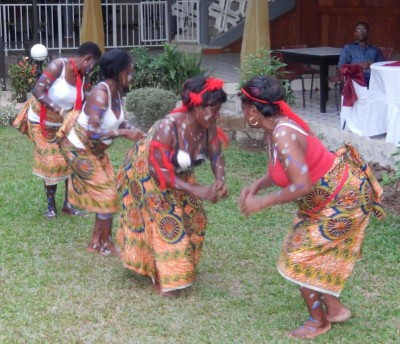
Traditional Dance

Courses are not boring – Limbé Cameroon

169 participants came from the DR of Congo, 118 from Cameroon, 68 from Burundi, 49 respectively from Benin and Central African Republic, 40 from Kenya, 30 from Zambia, 27 from the Netherlands, 21 from Tanzania, 19 from Afghanistan. They came from 43 countries worldwide. 23% were female and 77% male.

941 participants did the final exam of 30 multiple choice questions. The average score was 79% and 15 participants obtained the special honours of 100%. 23.8% obtained a distinction of 90% or more. 3% of the participants did not achieve the cut-off point of 55% correct answers and therefore obtained a certificate of participation instead of a certificate of merit.

0. Temple Vodoo Picture

Widah – Benin

An increasing number of courses are country specific such as last January in Uganda, last March in Burkina Faso and planned in July for the Republic of Congo and the first middle east course in Amman mainly for participants from Yemen in October.

The next open French spoken course will be in Cotonou from June the 16th and the next English spoken course will be from August 18th in Mombasa.

Print Friendly, PDF & Email

The april 2014 Mombasa PBF course

Flight to Mombasa

Travel to Mombasa

The 36th PBF 14-day course has finished in Mombasa at the 12th of April 2014.

There were 30 participants from 7 countries. This time the largest group is from Kenya with 9 participants followed by 5 from respectively Mozambique and Malawi. There were 3 participants from The Gambia and Ethiopia and 2 from both Nigeria and The Netherlands and one from South Sudan. This was the first English spoken course with a delegation from the education sector.

Mombasa Group

The 30 Mombasa PBF course participant

Cordaid aims to start an education PBF program in Malawi. After three years of a successful PBF pilot, Nigeria is contemplating how to scale up PBF to include more Local Government Authorities or even complete States. Scaling up was delayed due to the late arrival of the Technical Assistance team. This is unfortunately often the case with World Bank projects and new procurement instruments should be found to prevent such delays.

Finding the PBF target

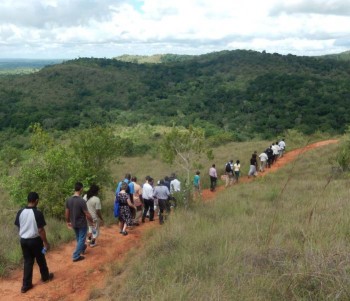
Where is the PBF target

The Mozambique group wonders how their successful pilot (mostly targeting HIV/AIDS) should be widened to become a more comprehensive health package approach and how PBF can be made sustainable with government financing. Ethiopia has not yet started PBF, but there is hope that a pilot will start soon in one of the States. It is very positive to note that health facilities in Ethiopia now have bank accounts and that cost-sharing revenues are allowed to be used by the health facilities.

The PBF Journey

The PBF Journey continues !

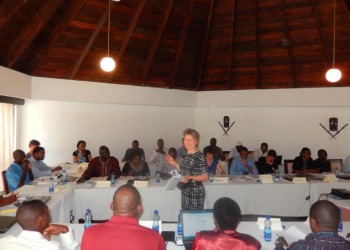
This PBF course also applies the adult learning format with group work, turning point sessions, self study and that each participants develops his or her individual action plan to be implemented immediately after the course. Mombasa with its beautiful beaches, good food and friendly population is a wonderful environment to hold such PBF courses. Yet, the PBF courses are a journey not a holiday. On the final day each participant showed what was learned during a competitive exam. There were 6 distinctions and 1 participant Dr Dereje GEMEDA from Ethiopia who obtained the highest distinctions with 100%.Class

Print Friendly, PDF & Email